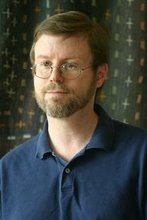
My partner Jenn has created a wonderful new 21st century version of my website, www.geoffwisner.com. The site now includes my blog, so please go there to see new posts.
Thursday, July 3, 2008

A Basket of Leaves is now available!

I mentioned it already in passing, but I don’t mind saying it again. My first book, A Basket of Leaves: 99 Books That Capture the Spirit of Africa, is now available for sale from booksellers including Amazon, Amazon Canada, Amazon UK, Powell's, Alibris, and AbeBooks. Journey through the 54 countries of Africa through novels, memoirs, travel books, and even some poetry.
Friday, June 27, 2008
Heinemann's African Writers Series
Around the time I finished writing A Basket of Leaves: 99 Books That Capture the Spirit of Africa (now available at Amazon, Amazon Canada, Amazon UK, Powell's, Alibris, AbeBooks, and elsewhere!) I was saddened to read about the demise of Heinemann's African Writers Series, which began with Things Fall Apart and went on to publish many important African writers. I reviewed more Heinemann titles in my own book than those of any other publisher, including Things Fall Apart, Efuru, When Rain Clouds Gather, Mission to Kala, The Last Harmattan of Alusine Dunbar, The Purple Violet of Oshaantu, Voices Made Night, The Chattering Wagtails of Mikuyu Prison, Mayombe, Season of Migration to the North, A Cowrie of Hope, The Seven Solitudes of Lorsa Lopez, A Grain of Wheat, and The Gunny Sack. Now I've learned from Laila Lalami's blog that the African Writers Series is back! Good news for fans of diversity in literature.
Thursday, June 26, 2008
Fun Home by Alison Bechdel

Maybe it’s not advisable to read about the death of a father when your own father has just died. But Alison Bechdel writes about her father with such understanding — and her father was so different from mine — that reading it was a bittersweet but not too painful experience.
Fun Home is a graphic memoir by the author of the long-running comic strip Dykes to Watch Out For. I first discovered Dykes to Watch Out For in the Boston Phoenix, and found that you don’t have to be gay to appreciate good writing and sharp humor. When Jenn and I were running our bookstore in Fort Greene, we featured the Dykes collections in our small but carefully selected gay and lesbian section. (Some customers were tickled to discover that Jenn, like the bookstore owner in Dykes, is a black woman with dreads — though the fictional owner is bigger and grumpier than Jenn.)
I knew from Dykes to Watch Out For that Alison Bechdel was smart, but I didn’t realize how literary she is until I read Fun Home. She comes from a literary family, to be sure: In Fun Home we see her father reading Proust and her mother acting in plays based on Henry James and reading Margaret Drabble (a favorite of mine) for fun. Bechdel herself begins writing a diary at the age of ten, and excerpts from that diary appear throughout Fun Home.
Fun Home is primarily about Bechdel and her father Bruce. Her mother is distinctly a secondary character, and even the names and number of her brothers are left pretty vague. (A boy in one panel is labeled “one of my brothers.”) But we see what seems like every flagstone, silk flower, and square of gold leaf in Bruce’s painstaking restoration of the family’s Gothic Revival house, and Bechdel is a tireless investigator of her parents’ troubled marriage and her father’s hidden life.
Bruce Bechdel was struck and killed by a Sunbeam Bread truck while crossing the highway near another house that he was restoring. Bechdel returns again and again to this scene. She is convinced that her father killed himself (“There’s no mystery!” she imagines telling someone at the funeral. “He killed himself because he was a manic-depressive, closeted fag and he couldn’t face living in this small-minded small town one more second.”) But readers may have more doubts. How likely is it that someone would kill himself in the middle of a working day, without a note or other warning, by jumping backward into the path of a truck?
But whatever happened that day, Fun Home is an subtle, moving memoir of an odd, gifted, troubled family.
Whitman's Brooklyn

Greg Trupiano of The Whitman Project, who led the Walt Whitman tour I wrote about a while ago, has announced the launch of the new website Whitman's Brooklyn. This is from Russell Granger, who created the site:
Whitman's Brooklyn is now live online -- please share the good news! Come enjoy this highly-immersive experience of Brooklyn's pictorial heritage. Many of the images we've uncovered have never been published online before, and most have never been seen in such a large, vivid format. Color, too! All the images can be viewed at maximum browser size, and some-- including bird's eye views and maps--can be explored using a powerful zoom-and-pan tool. The site currently contains only a portion of what we have collected and prepared. Many more remarkable images and stories will be posted over the coming weeks. The site has been built in a format to enable visitors to participate by leaving comments, questions, ideas, and stories. Join in!
Wednesday, June 25, 2008
The Exception by Christian Jungersen

The Exception is another book I was prompted to read by seeing the author at this year’s PEN World Voices Festival. Christian Jungersen’s novel is set in Denmark, and the main characters are a small group of women who work at an institution that researches genocide. An insidious form of office politics gradually poisons the relations between these women, and although Jungersen doesn’t try to equate office politics with genocide, the mechanisms of human cruelty are thoughtfully and troublingly explored.
In college and for a few years afterward, I read a lot about the Holocaust as a kind of research project into the nature of evil. I learned a lot, especially from Raul Hilberg, about the mechanisms of genocide, but not much about the psychology. Hannah Arendt’s “banality of evil” didn’t seem to go nearly far enough.
It seems that many of the books I was looking for at the time didn’t exist yet, so one of the most intriguing parts of The Exception for me was a series of articles written by Iben, one of the characters, on “The Psychology of Evil.” These are not only intelligent in themselves, but they footnote several (real) books that explore the problem of evil:
Becoming Evil: How Ordinary People Commit Genocide and Mass Killing by James Waller
Ordinary Men: Reserve Police Battalion 101 and the Final Solution in Poland by Christopher R. Browning
The Roots of Evil by Ervin Staub
Understanding Genocide ed. Leonard S. Newman and Ralph Erber
Tuesday, June 24, 2008
Stories of Your Life and Others by Ted Chiang

I read a lot of science fiction when I was in junior high and high school — Bradbury, Asimov, Harlan Ellison — but for a long time afterward I left it alone. In recent years, though, Jenn has gently reintroduced me to writers like Octavia Butler, Ursula K. LeGuin, and now Ted Chiang.
Chiang is unnervingly good, and seems to have been that way from the start. “Tower of Babylon,” his first published story, won the Nebula Award, and his subsequent stories have won a slew of other major awards. Though Stories of Your Life and Others is Chiang’s only full-length book, Chiang doesn’t seem to have achieved the fame and fortune he deserves.
Chiang’s stories are generally long, and are often categorized as novellas. They’re long because he doesn’t simply play with an interesting premise: He examines it from all angles, including its emotional impact on his characters.
The first Ted Chiang story I read, “Hell Is the Absence of God,” takes the beliefs of fundamentalist Christianity as literally as possible. People not only go to hell, but can be actually be seen there, under the earth. The visitations of angels are as devastating as tornadoes, and they attract angel-chasers who are just as obsessed and reckless as tornado-chasers. Other stories, like “Tower of Babylon,” use a similar strategy, asking “what if this were literally true?” and following out the implications.
But it was the title (or almost-title) story of this collection, “Story of Your Life,” that impressed me the most. One strand of the story describes how the narrator, an accomplished linguist, finds a way to communicate with aliens who resemble barrels with tentacles, and in so doing begins to perceive time in a different way. The other strand presents moments from her daughter’s short life, which the scientist mother now perceives as simultaneous. It’s a moving story, with characters every bit as believable as those in “literary fiction.”
It seems significant that although the appearance of the aliens made me think of the Antarctic creatures in H.P. Lovecraft, and the mother’s time perception reminded me of Slaughterhouse-Five, the grip of the story was strong enough that those connections didn’t occur to me until I’d finished it.
Monday, June 23, 2008
“Only God will remove me!”
My earlier hopeful post about developments in Zimbabwe was obviously off target. Sunday’s Times carried a heartbreaking story about the horrific violence being used against opponents of President Mugabe as a runoff election approaches. Today’s paper reports that opposition leader Morgan Tsvangirai has decided that the level of violence is too high to justify taking part in the election. Meanwhile Mugabe declares, “Only God will remove me!” and South Africa has declined to put any serious pressure on Mugabe’s government.
Tuesday, June 17, 2008
You’re missing
Please excuse the silence. I’m in a state of shock right now. My youngest brother John passed away earlier this month, less than three weeks after our father’s death from cancer. He died of a heart attack in his sleep. John had high blood pressure and a heart condition called bundle branch block, though I had never thought that this was life-threatening. He was under severe stress in recent months, both because our father was ill and because he had lost his job at the social services agency where he worked for almost twenty years. He told me he sometimes went three days in a row without sleeping. In his last email to me, he said that he was ready to concentrate on finding a new job but that it was scary because he’d never really had to do it before. My partner Jenn has created a website for John, which includes a slide show set to the song “You’re Missing” by Bruce Springsteen (one of my brother’s favorite musicians). Well over 75 people came to a memorial gathering for John on June 14, though it was put together at short notice. John had many friends, and all of us will miss him.
Wednesday, June 4, 2008
Guinea pigs for dinner

In the Times recently, a reporter described dining on roast guinea pig at an Ecuadorean restaurant in Queens. Guinea pigs are eaten, and apparently enjoyed, in the countries of the Andes, and a painting in the cathedral in Cuzco, Peru, pictures Jesus dining on guinea pig with his disciples.
The reporter’s description was less than enthusiastic:
There was very little meat, and it tasted somewhat similar to the dark meat of chicken, gamey like duck or rabbit. The meat was fatty and stringy at times. I had to pick it off the little ribs, and the skin was crunchy, with parts of it thicker with a chewy, almost rubbery, texture.I was reminded of The Wine-Dark Sea by Patrick O’Brian, the 16th volume in the Aubrey-Maturin series, in which Dr. Maturin sets out on a perilous mission through the Peruvian Andes. The account of guinea pig is even less appealing there:
Three times that day, and at ever-increasing heights, they had left their mules in the hope of a partridge or a guanaco, and three times they had caught up with the llamas not indeed empty-handed, since Stephen carried a beetle or a low-growing plant for the pack of the animal that carried their collections, but without any sort of game, which meant that their supper would be fried guinea-pig and dried potatoes once more; and each time Eduardo had said that this was a strange, unaccountable year, with weather that made no sense and with animals abandoning customs and territories that had remained unchanged since before the days of Pachacutic Inca.A few pages later, Maturin suggests shooting a vicuña for food, observing to his companion, “You yourself said that you were tired of fried guinea-pig and ham.” Eduardo quietly confirms this in a little while, when Maturin says he would like to dissect an unusual bird they have just bagged.
‘That would mean fried guinea-pig again,’ observed Eduardo.The two eventually arrive at a Catholic mission, but the priests are nonplussed at having little to offer their guests. “Well,” says one at last, “there may be a few guinea-pigs left in the scriptorium.” One would think that O’Brian has exhausted the subject, yet his final unfinished novel (published under the title 21) features “a formal dinner given by an Argentine grandee, which includes lobster in a bitter chocolate sauce and 70 freshly harvested guinea pigs.”
Tuesday, June 3, 2008
The World of Donald Evans

My copy of The World of Donald Evans is one of my most cherished books. In addition to being a beautifully produced record of a short but luminous art career, it was also surprisingly hard to get. Used copies were not especially expensive when I looked for them online, but the first two or three times I ordered one, I was told the book wasn’t available after all. Maybe the book dealers decided they couldn’t part with them after all.
Donald Evans was an American artist who lived in the Netherlands and died in a fire when he was in his early thirties. His specialty was the creation of postage stamps from imaginary countries, which he rendered in watercolors and often marked with custom-designed cancellations. Bruce Chatwin wrote a tribute to Evans that appears in the collection What Am I Doing Here:
His colour sense was as faultless as his draughtsmanship. A set of his stamps sits on a page like butterflies in a case. And, needless to say, he loved butterflies and came up with a country for them — Rups, which is the Dutch for ‘caterpillar’. He himself said he had no originality, and that he preferred to work from photographs or given images: yet one flat panorama of Achterdijk has the ‘breathed-on’ quality of a sepia-wash landscape by Rembrandt. His art was so disciplined that it was patient of receiving anything that happened to attract him — zeppelins, barnyard fowls, penguins, pasta, a passion for mushroom hunting, Sung ceramics, shells, dominoes; drinks at the Bar Centrum; windmills that were ‘abstract’ portraits of friends; the vegetable market at Cadaques, or a recipe for pesto from Elizabeth David’s Mediterranean Cooking: his way of recording the pleasures of food and drink reminds me, somehow, of Hemingway.
Monday, June 2, 2008
Grammatical humor
One of the pleasures of rereading Patrick O’Brian is that the Aubrey-Maturin novels become funnier as you become attuned to O’Brian’s understated sense of humor. Much of the humor is in the dialogue (pay particular attention to the pauses), but by no means all. This passage (p. 195 of Master and Commander) made me wonder if O’Brian was lectured as a child about ending a sentence with a preposition. Captain Aubrey is speaking to some midshipmen who have been doing poorly on their navigation homework:
‘You can write decently, I suppose? Otherwise you must go to school to the clerk.’ They hoped so, sir, they were sure; they should do their best. But he did not seem convinced and desired them to sit down on that locker, take those pens and these sheets of paper, to pass him yonder book, which would answer admirably for them to be read to out of from.
Saturday, May 31, 2008
Racial understanding in Oregon
The Times has reported on the Restorative Listening Project in Portland, Oregon, which aims to increase understanding between the races on gentrification and other divisive issues. Looks like it's working already:
Last month, Joan Laufer, who is white and who moved into a house in Northeast in 2006, stood up to express gratitude to a black minister for describing how hard it was for blacks to get home improvement loans and for addressing some sensitive stereotypes.“I’ve learned two things about all you guys already — why the houses aren’t fixed up and why you guys are riding around in all these big flashy cars,” Ms. Laufer, 55, a nurse practitioner, said.
At one point, she also asked blacks what she should call them — blacks or African-Americans.
An older black woman in the front replied, “People.”
Friday, May 30, 2008
Edward Wisner's fountain

Many thanks to the reader in New Orleans who noticed my post on Edward Wisner and commented on it. He sent this photo later, taken during a scavenger hunt, and added, "After reviewing the photo again, I realized that it must be the fountain that you mention in the article. It's located in West End Park near where the Southern Yacht Club was located (the yacht club was destroyed by fire in the aftermath of Hurricane Katrina). In fact, that whole area was heavily damaged by the storm surge. "
I enjoy the wetland motif of lily pads and cattails that was used to create this memorial fountain. Maybe someday I can see it in person.
Thursday, May 29, 2008
What should I pay for that condo?
Renting isn’t necessarily for dummies, according to a new article in the Times. As the article says (apologies for those who can’t access it):
One of the big lies of the real estate business is the idea that renting a home is tantamount to throwing money away. It’s a useful fiction for real estate agents, because they make vastly bigger commissions on house sales than rentals. But the comparison isn’t nearly so straightforward for the rest of us. Renting involves one obvious, recurring cost that can never be recouped: the monthly rent check. Buying, on the other hand, involves multiple expenses, some of which aren’t so obvious. On top of closing costs, there are repairs, property taxes, mortgage principal and mortgage interest. (The mortgage-interest tax deduction reduces this last cost but doesn’t eliminate it.) When you own, you also lose the ability to invest your down payment elsewhere, like the stock market.So where’s the break-even point? At what point does it become more expensive to rent than to buy? The article says it’s roughly the point where a property costs more than 20 times the annual rent for the same property. So if your apartment rents for $2,000 a month, you shouldn’t pay more than $480,000 to buy it. There are lots of variables to consider, of course, and the Times provides this nifty online calculator to play with them.
Amazingly Very Clean!
That's what the poster says at my local dry cleaner: "Platinum Shirt Service, Amazingly Very Clean!"
Tuesday, May 27, 2008
Iron Man
 An email from a friend contains what I thought was an insightful review of Iron Man. Here it is:
I enjoyed IRON MAN. Well, actually, I didn't enjoy Iron Man the hero -- or Iron Man the computer-generated special effect -- or even IRON MAN the movie as a whole -- but I loved watching Robert Downey Jr as the solipsistic Tony Stark, hellbent on reinventing himself as Iron Man: it's a funny and nuanced bit of business, beautifully handled by a brilliant comic actor. The best scenes are those in which Tony is alone in the garage-cum-laboratory -- alone except for JARVIS (and that sophisticated fire extinguisher that is seemingly made to do only one thing -- extinguish fires -- and just won't leave the stage until it's had the chance to fulfill its destiny as a fire extinguisher). My favorite line is Tonys's remark after being borne aloft -- magically -- by boots of his own design, skittering around the room, and then coming in for a wobbly two-point landing: "OK, I can fly." He's just performed a technological miracle, but his mind is racing ahead to the next challenge, the next step in becoming Iron Man. He's a genius who takes no pleasure in his genius, he's too busy looking ahead to the next thing. This is all conveyed to the audience in a line or two and in an attitude, with a brilliant economy and flair. (I also liked the funny-tender scene in which Pepper Potts helps Tony replace the little "arc-reactor cup thing" that keeps his heart beating. I liked it because it was intimate in a yucky way, yucky in an intimate way, and the partly improvised dialogue both funny and sexy, in the old-fashioned, Katharine Hepburn and Jimmy Stewart, screwball comedy style. And because it was something fun and unexpected that arose out of the material -- and, in the end, proved anything but gratuitous to the storyline.) I read online that the sequel is scheduled for April 2010; I hope that now that all the throat-clearing exposition has been accomplished the writers can craft a really good movie out the world they've created, the way they did for SPIDER-MAN 2 (the Dr. Octopus chapter, which was the best of the lot, don't you think?). They just can't forget that what is really compelling about Iron Man is the actor in the suit, not the suit itself, or the physical punishment it can take . . .
Specimen Days by Walt Whitman

Last month I went on a Walt Whitman walking tour that began in Fort Greene Park and proceeded to 99 Ryerson Street, the only surviving building of the dozen or so where Whitman lived at various times in Brooklyn. (The frame building, wedged into a row of similar houses, is one story higher now than when it was built, and is covered in yellow siding.) Greg Trupiano, who led the tour, spoke highly of Whitman’s memoir Specimen Days, so I read it later in my Library of America Whitman, along with the original edition of Leaves of Grass.
Specimen Days is a hodgepodge, but with interesting bits. It begins with reminiscences of growing up on Long Island, continues with an account of the wounded soldiers Whitman visited during the Civil War (some of the best material in the book), moves on to nature writing from then-bucolic Camden, New Jersey (maddening in its vague effusiveness if you compare it to the sharp-eyed observations of Thoreau), then concludes with thoughts on old age and some literary gossip, including visits to Emerson and Longfellow toward the end of their lives.
Whitman had a nodding acquaintance with President Lincoln, and a brief item called “No Good Portrait of Lincoln” reflects on his face.
Probably the reader has seen physiognomies (often old farmers, sea-captains, and such) that, behind their homeliness, or even ugliness, held superior points so subtle, yet so palpable, making the real life of their faces almost as impossible to depict as a wild perfume or fruit-taste, or a passionate tone of the living voice — and such was Lincoln’s face, the peculiar color, the lines of it, the eyes, mouth, expression. Of technical beauty it had nothing — but to the eye of a great artist it furnished a rare study, a feast and fascination. The current portraits are all failures — most of them caricatures.On the same page is a description of the wasted prisoners just released from Andersonville and other Confederate POW camps. “The dead there are not to be pitied as much as some of the living that come from there — if they can be call’d living — many of them are mentally imbecile, and will never recuperate.”
Friday, May 23, 2008
The Art of Political Murder by Francisco Goldman

Francisco Goldman is another author whom I checked out after seeing him at PEN. The Art of Political Murder is a nonfiction account of the murder of Bishop Gerardi in Guatemala City in 1998. Goldman reported the case on spec for The New Yorker, returning to Guatemala repeatedly over a number of years.
Gerardi was beaten to death on the grounds of the parish house of the church of San Sebastian (which was Goldman’s own church as a child). The killing came shortly after Gerardi released a massive report holding the former military regime responsible for the vast majority of the deaths of 200,000 Guatemalans in the country’s civil war.
The motive and the culprits might seem obvious, but complications quickly arose. Why should the bishop be killed after the report appeared and not before? Wouldn’t military killers have done the job more cleanly? And what about the strange behavior of Father Mario?
Goldman tells a complicated story in clean journalistic prose, though fairly close attention is needed to keep the movements and identities of the characters straight. (Helpful maps and lists are provided.) Though the killing and disappearance of witnesses are a recurring theme, Goldman doesn’t dwell much on the danger he is running himself. One exception comes when he receives a frightening phone call from the powerful Colonel Lima, one of the main suspects in the killing. The call is even more unsettling because static makes most of it undecipherable.
Knowing that I’d put myself on Colonel Lima’s radar make me uneasy, although I didn’t really think that anything was going to happen to me, an American citizen.... But when I came home at night I was frightened by the darkness of my room at the Spring, whose only window opened onto a small patio, and I worried about the flimsy lock on the door. Stuck in traffic on gray afternoons in late September, I’d feel overwhelmed by a very particular sadness, something that seemed to come from the unconscious memory of the street itself, of all the people who were driving or just walking to or from someplace — an office, a church, the movies, school — and must have had a last moment of panic or grief or resignation, realizing that there was no escape and that they would never get home.
Thursday, May 22, 2008
The More You Watch, The Less You Know by Danny Schechter
 I met Danny Schechter a while ago, at a screening of his funny and frightening movie In Debt We Trust that was sponsored by the community development organization NEDAP. It reminded me that I’d been meaning for a long time to read his book The More You Watch, The Less You Know, which was published in 1997.
The More You Watch is a memoir of Schechter’s life as a media maverick, with a strong emphasis — especially interesting to me — of his involvement in covering the anti-apartheid struggle in South Africa. It also contains a sharp analysis of how the news media, especially TV news, are failing the public. There’s a reason, for instance, why it’s taken so long for people to realize that if they’re broke and unemployed it’s not because of their personal failings.
A Harvard study has equated more TV watching with a drop in civic participation. One reason: Our powerful cultural industries shape the narratives by which ordinary Americans interpret their lives and outlooks. When those narratives never emphasize how ordinary people can change things, cynicism becomes rife in the public at large... News programming reinforces this. A friend of mine reports for a Boston TV station that practices “user friendly news.” She told me, “In almost every newscast we treat viewers as consumers, not citizens. For example, we give people tips on what to do if you have a cold, but no information about the crisis in health care. All problems are privatized and individualized; people are encouraged to think and act only for themselves or their family, not as members of a group, a class, or something called society.”Schechter’s data on the media is necessarily dated, but it’s illuminating to see just how bad things had become even before Bush’s first stolen election and the latest round of media consolidation. I can’t check this (the book has no index) but I believe that Fox News (which played such an important part in calling the 2000 election for Bush) is barely mentioned, and neither is the Internet. I would love to see Schechter separate his media critique from his memoir, update the facts, and publish a shorter, sharper book on how the media continue to make us dumber.
Subscribe to:
Posts (Atom)