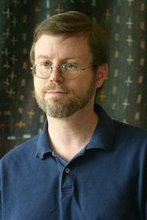
This was my last session for this year’s PEN festival, and it was a pleasant change of pace from the panels on wars and genocide that I’d attended earlier. Spurred and challenged and interrupted by the multilingual and irrepressible Paul Holdengräber, five authors spoke of the books that had been most important to them.
The choices were more unusual than I’d expected. Catherine Millet, author of The Sexual Life of Catherine M., went with a safe pick: The Lily of the Valley by Balzac, which she’d heard on the radio as a child. Antonio Muñoz Molina spoke of E.O. Wilson’s Journey to the Ants, which made him realize that books about oneself, or people like oneself, are not always the most important – that close observation of nature can open up new worlds.
Yousef Al-Mohaimeed recalled his first exposure to The Arabian Nights, which his sister read to him as a child, and Zorba the Greek, which broke through his narrow-mindedness. Annie Proulx spoke of reading Jack London’s rollicking prehistoric melodrama Before Adam when she was seven years old and bored to death by Dick and Jane and Spot.
I was most pleased, though, by the choice of Olivier Rolin, a last-minute substitute on the panel whose name did not appear in the program. The book that changed his life (though he argued with the idea that any book can make that grand a claim) was one of my own favorites: Malcolm Lowry’s Under the Volcano.
Why? Because Under the Volcano deals with “the loss of Eden, the fall, the guilt, the impossible salvation, the forces inside man which compel him to defy himself, to terrorize himself” (or did his French accent cause me to mishear that?). And yet it was “full of humor, not boring, not solemn, not Dostoyevsky.”
Which led to a charming digression by Holdengräber about whether Dostoyevsky had a sense of humor, and how the translators Richard Pevear and Larissa Volokhonsky allegedly met: each reading a copy of The Idiot, with Volokhonsky (reading in Russian) laughing to herself while Pevear (reading in English) saw nothing to laugh about. So maybe the translations have been the problem all this time.
This was my last session for this year’s PEN festival, and it was a pleasant change of pace from the panels on wars and genocide that I’d attended earlier. Spurred and challenged and interrupted by the multilingual and irrepressible Paul Holdengräber, five authors spoke of the books that had been most important to them.
The choices were more unusual than I’d expected. Catherine Millet, author of The Sexual Life of Catherine M., went with a safe pick: The Lily of the Valley by Balzac, which she’d heard on the radio as a child. Antonio Muñoz Molina spoke of E.O. Wilson’s Journey to the Ants, which made him realize that books about oneself, or people like oneself, are not always the most important – that close observation of nature can open up new worlds.
Yousef Al-Mohaimeed recalled his first exposure to The Arabian Nights, which his sister read to him as a child, and Zorba the Greek, which broke through his narrow-mindedness. Annie Proulx spoke of reading Jack London’s rollicking prehistoric melodrama Before Adam when she was seven years old and bored to death by Dick and Jane and Spot.
I was most pleased, though, by the choice of Olivier Rolin, a last-minute substitute on the panel whose name did not appear in the program. The book that changed his life (though he argued with the idea that any book can make that grand a claim) was one of my own favorites: Malcolm Lowry’s Under the Volcano.
Why? Because Under the Volcano deals with “the loss of Eden, the fall, the guilt, the impossible salvation, the forces inside man which compel him to defy himself, to terrorize himself” (or did his French accent cause me to mishear that?). And yet it was “full of humor, not boring, not solemn, not Dostoyevsky.”
Which led to a charming digression by Holdengräber about whether Dostoyevsky had a sense of humor, and how the translators Richard Pevear and Larissa Volokhonsky allegedly met: each reading a copy of The Idiot, with Volokhonsky (reading in Russian) laughing to herself while Pevear (reading in English) saw nothing to laugh about. So maybe the translations have been the problem all this time.
Sunday, May 4, 2008
PEN World Voices: Books That Changed My Life

PEN World Voices: Truth and Reconciliation: A National Reckoning

PEN World Voices: African Wars
 The panel for African Wars brought together two writers whose work I had known and respected for years – Nuruddin Farah and Chenjerai Hove – with another, Abdourahman Waberi, whom I had met the day before and found sharp and engaging. I expected some harrowing stories, stinging denunciations, and tough proposed solutions. What I didn’t expect was the aimless, detached, abstract quality of the discussion and the troubling racial undercurrents that seemed to surface in the room.
The discussion got off track almost at once, after moderator Violaine Huisman threw out for reaction a quotation from Ryszard Kapuscinski. “Only with the greatest simplification, for the sake of convenience, can we say ‘Africa,’” he had written in The Shadow of the Sun. “In reality, except as a geographical appellation, Africa does not exist.”
“Africa does not exist?” retorted Hove. “Where is the man coming from?”
Farah and Waberi, quickly showing themselves to be more subtle than the plain-spoken Hove, said that of course Kapuscinski was referring to the immense diversity of the continent.
“Africa is too complex for the likes of Kapuscinski,” said Farah, dismissing the work of a man who covered twenty-seven revolutions and coups between 1958 and 1980. “Because it exists, that’s why we have wars.”
Hove tried to deal with the problem of war more substantively, but his comments covered familiar ground. The national borders established by the Berlin conference in the 19th century had no meaning for ordinary people, he said, and led to conflict. War is about the distribution of power and its benefits. Everything is political: even the chairs we sit on and the trees planted along the streets outside are there because of decisions made by human beings.
Hove’s points were valid, if a bit obvious, and could have been the basis for a deeper discussion. But perhaps because he presented himself more as a man of the people than an academic, and because he illustrated his points with homely anecdotes (one of them about a war that allegedly broke out between Botswana and Zimbabwe when a hunter chased an elephant across the border), the mostly white audience laughed for what seemed the wrong reasons. Those crazy Africans, fighting over elephants!
Farah’s contributions were more sophisticated but less helpful. Each reason for war that he offered seemed to carry the message that there was little we could do about it. War is a part of the national development of African countries, he said. The conflict in the Congo is the equivalent of the 30 Years’ War in Germany. Every form of industrial and mechanical development in Africa had been interrupted and frustrated by slavery and colonialism. However much you love your child, you must be willing to see it fall before it learns to walk. Wars, he said, do not happen overnight. They gestate in the hearts and minds of people.
What about Zimbabwe? asked a black woman in the audience. The chimurenga war of the 1890s was against colonialism, but the struggle today is for democracy.
Oh no, said Farah. Democracy is not something you fight for. It is something that happens at the end of a long process by which you grow and develop and eventually become a whole person. (Not a message likely to inspire those struggling to end the dictatorship of Mugabe.)
Though I have lived and worked in Zimbabwe, I don’t always enjoy the way my fellow white people talk about Africa at events like this one: sometimes trying too hard to show their expertise in all things African, but more often self-righteous or apologetic, trying to make plain that they are not like those other white folks with their backward ideas.
At this point a white woman spoke up to say that on a visit to Africa (I forget if she said exactly where) she had met many people whose voices were not being heard. What could be done to help them express themselves, to find their voices? I cringed a little at the tone – what can be done to help these poor people? – but waited with real interest for the answer.
“What kind of question is that?” broke in a black woman from the back of the auditorium. Farah seemed to agree, brushing away the question as meaningless, but Hove objected, defending not so much the question itself, but the woman’s democratic right to ask it.
However naïve the attitude of the questioner might have been, I didn’t see what was wrong with the question. And indeed, as I learned later, in another session going on simultaneously at the French Institute, the Nigerian novelist Uzodinma Iweala was describing how he had brought video cameras to an AIDS center in Africa, and the delight of the residents in using the technology to express themselves.
Maybe the quashing of the woman’s question was driven by an irritation in the audience that I felt myself. More than five million people have died in the Congo since 1998, in a war that, if it were happening in Europe, would be referred to as World War III. But by the end of an hour and a half nobody had made any practical suggestions to help stop the wars of the future. More African Union troops or UN peacekeepers? A crackdown on international arms trading? More funding of microfinance initiatives to increase prosperity?
And more to the point (since these were writers, after all, and not policy wonks), nobody had told a story that might inject the topic with the urgency it deserves – nothing that would render intimate and specific the familiar, easily ignored image of anonymous Africans dying in endless and meaningless wars.
The panel for African Wars brought together two writers whose work I had known and respected for years – Nuruddin Farah and Chenjerai Hove – with another, Abdourahman Waberi, whom I had met the day before and found sharp and engaging. I expected some harrowing stories, stinging denunciations, and tough proposed solutions. What I didn’t expect was the aimless, detached, abstract quality of the discussion and the troubling racial undercurrents that seemed to surface in the room.
The discussion got off track almost at once, after moderator Violaine Huisman threw out for reaction a quotation from Ryszard Kapuscinski. “Only with the greatest simplification, for the sake of convenience, can we say ‘Africa,’” he had written in The Shadow of the Sun. “In reality, except as a geographical appellation, Africa does not exist.”
“Africa does not exist?” retorted Hove. “Where is the man coming from?”
Farah and Waberi, quickly showing themselves to be more subtle than the plain-spoken Hove, said that of course Kapuscinski was referring to the immense diversity of the continent.
“Africa is too complex for the likes of Kapuscinski,” said Farah, dismissing the work of a man who covered twenty-seven revolutions and coups between 1958 and 1980. “Because it exists, that’s why we have wars.”
Hove tried to deal with the problem of war more substantively, but his comments covered familiar ground. The national borders established by the Berlin conference in the 19th century had no meaning for ordinary people, he said, and led to conflict. War is about the distribution of power and its benefits. Everything is political: even the chairs we sit on and the trees planted along the streets outside are there because of decisions made by human beings.
Hove’s points were valid, if a bit obvious, and could have been the basis for a deeper discussion. But perhaps because he presented himself more as a man of the people than an academic, and because he illustrated his points with homely anecdotes (one of them about a war that allegedly broke out between Botswana and Zimbabwe when a hunter chased an elephant across the border), the mostly white audience laughed for what seemed the wrong reasons. Those crazy Africans, fighting over elephants!
Farah’s contributions were more sophisticated but less helpful. Each reason for war that he offered seemed to carry the message that there was little we could do about it. War is a part of the national development of African countries, he said. The conflict in the Congo is the equivalent of the 30 Years’ War in Germany. Every form of industrial and mechanical development in Africa had been interrupted and frustrated by slavery and colonialism. However much you love your child, you must be willing to see it fall before it learns to walk. Wars, he said, do not happen overnight. They gestate in the hearts and minds of people.
What about Zimbabwe? asked a black woman in the audience. The chimurenga war of the 1890s was against colonialism, but the struggle today is for democracy.
Oh no, said Farah. Democracy is not something you fight for. It is something that happens at the end of a long process by which you grow and develop and eventually become a whole person. (Not a message likely to inspire those struggling to end the dictatorship of Mugabe.)
Though I have lived and worked in Zimbabwe, I don’t always enjoy the way my fellow white people talk about Africa at events like this one: sometimes trying too hard to show their expertise in all things African, but more often self-righteous or apologetic, trying to make plain that they are not like those other white folks with their backward ideas.
At this point a white woman spoke up to say that on a visit to Africa (I forget if she said exactly where) she had met many people whose voices were not being heard. What could be done to help them express themselves, to find their voices? I cringed a little at the tone – what can be done to help these poor people? – but waited with real interest for the answer.
“What kind of question is that?” broke in a black woman from the back of the auditorium. Farah seemed to agree, brushing away the question as meaningless, but Hove objected, defending not so much the question itself, but the woman’s democratic right to ask it.
However naïve the attitude of the questioner might have been, I didn’t see what was wrong with the question. And indeed, as I learned later, in another session going on simultaneously at the French Institute, the Nigerian novelist Uzodinma Iweala was describing how he had brought video cameras to an AIDS center in Africa, and the delight of the residents in using the technology to express themselves.
Maybe the quashing of the woman’s question was driven by an irritation in the audience that I felt myself. More than five million people have died in the Congo since 1998, in a war that, if it were happening in Europe, would be referred to as World War III. But by the end of an hour and a half nobody had made any practical suggestions to help stop the wars of the future. More African Union troops or UN peacekeepers? A crackdown on international arms trading? More funding of microfinance initiatives to increase prosperity?
And more to the point (since these were writers, after all, and not policy wonks), nobody had told a story that might inject the topic with the urgency it deserves – nothing that would render intimate and specific the familiar, easily ignored image of anonymous Africans dying in endless and meaningless wars.
Friday, May 2, 2008
PEN World Voices: Short Stories
 Tall and striking in an elaborately figured dress or robe, Radikha Jones of the Paris Review began this session with a spirited defense of the health of the short story, noting that her own magazine receives 1,200 submissions a month. But the short-story authors on hand quickly undermined her position.
Ingo Schulze noted that his publisher didn’t want the word “stories” on the cover of one of his books. Etgar Keret said that the fragmented nature of reality in Israel caused readers to avoid short fiction and bury themselves in epic novels. Abdourahman Waberi said he was encouraged to write whatever he wanted, so long as he called it a novel.
Only Young-ha Kim reported that he comes from a country – Korea – where the short story is held in high regard. An annual prize of $10,000 goes to the best short story, and writers must show prowess in that form to be taken seriously. There are four Chinese characters, he said, that refer to murdering someone with a very short weapon, and that’s the challenge of a good short story. Keret put it a little differently: a short story that works is like killing someone with a toothpick rather than an atomic bomb.
The titles of these authors’ collections were irresistible: 33 Moments of Happiness by Schulze, The Girl on the Fridge by Keret, and The Land Without Shadows by Waberi. (Young-ha Kim had also published a novel called I Have the Right to Destroy Myself.)
I was especially happy to see Waberi, who is the first author from Djibouti whose work I’ve been able to find in English. He read from a story called “The Seascape Painter and the Wind Drinker.” I bought his book after the reading and chatted with him a bit as he signed it.
Tall and striking in an elaborately figured dress or robe, Radikha Jones of the Paris Review began this session with a spirited defense of the health of the short story, noting that her own magazine receives 1,200 submissions a month. But the short-story authors on hand quickly undermined her position.
Ingo Schulze noted that his publisher didn’t want the word “stories” on the cover of one of his books. Etgar Keret said that the fragmented nature of reality in Israel caused readers to avoid short fiction and bury themselves in epic novels. Abdourahman Waberi said he was encouraged to write whatever he wanted, so long as he called it a novel.
Only Young-ha Kim reported that he comes from a country – Korea – where the short story is held in high regard. An annual prize of $10,000 goes to the best short story, and writers must show prowess in that form to be taken seriously. There are four Chinese characters, he said, that refer to murdering someone with a very short weapon, and that’s the challenge of a good short story. Keret put it a little differently: a short story that works is like killing someone with a toothpick rather than an atomic bomb.
The titles of these authors’ collections were irresistible: 33 Moments of Happiness by Schulze, The Girl on the Fridge by Keret, and The Land Without Shadows by Waberi. (Young-ha Kim had also published a novel called I Have the Right to Destroy Myself.)
I was especially happy to see Waberi, who is the first author from Djibouti whose work I’ve been able to find in English. He read from a story called “The Seascape Painter and the Wind Drinker.” I bought his book after the reading and chatted with him a bit as he signed it.
PEN World Voices: Reading the World
 As the title should have alerted me, this session was a collection of short readings rather than a discussion of some literary or political topic. My attention span for being read to is limited – I go to readings more to see what the author looks and sounds like, and for the Q&A, rather than for any particular nuance in the reading itself – but this group was varied enough (and each one brief enough) to keep me focused.
Peter Carey read from the beginning of his new novel His Illegal Self, after calling the modernistic podium “terrifying” because it wouldn’t hide his restless legs. (“I’m a fidgety fellow,” he said.) The Norwegian writer Halfdan Freihow read from a book called Dear Gabriel. Written in the form of a letter to an autistic son, the book is referred to as a novel in the PEN program, but in its details and the way Freihow spoke about it, it seemed at least strongly rooted in reality. Francesc Serés, an author who lives in a Catalonian village with sixteen inhabitants, read from a story that begins with a man standing on pool table and hurling the balls at a mirror behind the bar: a few lines in Catalan, then at greater length in a flowing and heavily accented English
My favorite segment, though, was Janet Malcolm’s reading from her new book Two Lives: Gertrude and Alice. I’ve always found remarks about Stein much more interesting than reading Stein herself (though wasn’t it Stein who said “remarks are not literature”?), and Two Lives contains some juicy remarks, some of them about the difficulty of reading her. Malcolm’s subject, at least for this part of the book, was a Stein scholar named Ulla Dydo, the author of a 659-page work over which, Malcolm says, hovers the question “Is Stein worth the effort to read her?”
Dydo had studied a Stein work called “Stanzas in Meditation,” of whom someone wrote that it was perhaps the dreariest long poem in the world. Dydo noticed that throughout the manuscript of the poem the word “may” had been crossed out, often violently, and replaced with “can,” or in different contexts with “today” or “day” – often to the detriment of the sound and sense. The reason came to Dydo in a dream while she was staying in a spartan hostel near the Beinecke Library. “May” was the name of Stein’s lover in an early and forgotten autobiographical novel called QED, and a vindictive Alice B. Toklas had forced her to take out every “may” in the long poem.
Startling as it is in itself, Malcolm noted that it lends credibility to the passage in Hemingway’s A Moveable Feast when he recounts a visit to Stein’s home in which he hears Toklas speaking to her in a way he had never heard a human being speak to another. Some have assumed that this was Hemingway’s revenge for snide comments by Stein, but in fact may have been (whatever Hemingway’s hangups about gay people) evidence that lesbians can be just as sadomasochistic as anybody.
As the title should have alerted me, this session was a collection of short readings rather than a discussion of some literary or political topic. My attention span for being read to is limited – I go to readings more to see what the author looks and sounds like, and for the Q&A, rather than for any particular nuance in the reading itself – but this group was varied enough (and each one brief enough) to keep me focused.
Peter Carey read from the beginning of his new novel His Illegal Self, after calling the modernistic podium “terrifying” because it wouldn’t hide his restless legs. (“I’m a fidgety fellow,” he said.) The Norwegian writer Halfdan Freihow read from a book called Dear Gabriel. Written in the form of a letter to an autistic son, the book is referred to as a novel in the PEN program, but in its details and the way Freihow spoke about it, it seemed at least strongly rooted in reality. Francesc Serés, an author who lives in a Catalonian village with sixteen inhabitants, read from a story that begins with a man standing on pool table and hurling the balls at a mirror behind the bar: a few lines in Catalan, then at greater length in a flowing and heavily accented English
My favorite segment, though, was Janet Malcolm’s reading from her new book Two Lives: Gertrude and Alice. I’ve always found remarks about Stein much more interesting than reading Stein herself (though wasn’t it Stein who said “remarks are not literature”?), and Two Lives contains some juicy remarks, some of them about the difficulty of reading her. Malcolm’s subject, at least for this part of the book, was a Stein scholar named Ulla Dydo, the author of a 659-page work over which, Malcolm says, hovers the question “Is Stein worth the effort to read her?”
Dydo had studied a Stein work called “Stanzas in Meditation,” of whom someone wrote that it was perhaps the dreariest long poem in the world. Dydo noticed that throughout the manuscript of the poem the word “may” had been crossed out, often violently, and replaced with “can,” or in different contexts with “today” or “day” – often to the detriment of the sound and sense. The reason came to Dydo in a dream while she was staying in a spartan hostel near the Beinecke Library. “May” was the name of Stein’s lover in an early and forgotten autobiographical novel called QED, and a vindictive Alice B. Toklas had forced her to take out every “may” in the long poem.
Startling as it is in itself, Malcolm noted that it lends credibility to the passage in Hemingway’s A Moveable Feast when he recounts a visit to Stein’s home in which he hears Toklas speaking to her in a way he had never heard a human being speak to another. Some have assumed that this was Hemingway’s revenge for snide comments by Stein, but in fact may have been (whatever Hemingway’s hangups about gay people) evidence that lesbians can be just as sadomasochistic as anybody.
PEN World Voices: The Secret Lives of Cities
 The Secret Lives of Cities brought together authors whose work has focused on particular city: Recacoechea on La Paz, Al-Mohaimeed on Riyadh, Goldman on Guatemala City, and Furst on Minneapolis.
Though Al-Mohaimeed (who spoke with the help of an interpreter) and Recacoechea made striking comments, they were handicapped by lack of fluency in English, so Furst and Goldman tended to dominate the discussion.
Furst, though a native New Yorker, had set his novel The Sabotage Cafe in Minneapolis, a city he had never lived in. Recacoechea objected that this couldn’t be done, but Furst maintained that he knew enough from many visits there to catch the personality of the place. In fact, he found New York the hardest place to write about. Like the narrator of Calvino’s Invisible Cities, he would have to give a hundred different versions of New York to convey what he knew.
Furst knew Minneapolis at least in part because of the “many ex-girlfriends” who have lived there. A city is made up of the mindset of those who live there, he said, and there is a psychological war between various factions to be “the mood, the mode, the idea” of that city. "The kids in my book," he said, "are anarchist fuckups, who see the possibility of creating a space of disruption to keep the city alive."
Furst’s book is set in the Dinkytown neighborhood near the university, and through the eyes of a woman returning there after twenty years away, he describes how the vegan whole-wheat pizza joints and the head shops where you could buy a feather-tipped roach clip have given way to boutiques with cute names and Japanese restaurants with bland teak walls.
Goldman was a volcano of fluent description. I haven’t read his fiction so I can’t comment on the way he draws characters, but he describes Guatemala City like an investigative journalist. A beefy man with a plain face, Jenn thought he was the kind of harmless-looking fellow that people might spill their secrets to. His latest book is a work of nonfiction, The Art of Political Murder, which Lieve Joris (at the panel on genocide) had mentioned having read.
One of Goldman’s riffs began when the moderator, Matt Weiland, made a comment about the experience of someone who lives in a city, a “city liver,” then cocked his head, realizing that sounded odd.
“Guatemala City is hard drinking, so city liver is there,” said Goldman. "It’s a lawless city," he went on. Seventy percent of the cocaine that reaches the US is transshipped there. Squatter slums have grown on the horrible muddy inclines around the city: a pulsing, perverted life. There’s space for enormous creativity, effervescence, “criminal busyness.” Crib houses are packed with stolen Indian babies from the highlands, being fattened up for the US adoption trade. Chop shops are dug into the ravines, Goldman said, and cars stolen in New York City may end up there. The city is extremely murderous. More people were killed there in 2006 than in Afghanistan. The gangs are medieval in their arcane structure and fervor. The city is pulsing with a very, very dark life.
“Frank is working for the tourist board of Guatemala,” Weiland said dryly.
The Secret Lives of Cities brought together authors whose work has focused on particular city: Recacoechea on La Paz, Al-Mohaimeed on Riyadh, Goldman on Guatemala City, and Furst on Minneapolis.
Though Al-Mohaimeed (who spoke with the help of an interpreter) and Recacoechea made striking comments, they were handicapped by lack of fluency in English, so Furst and Goldman tended to dominate the discussion.
Furst, though a native New Yorker, had set his novel The Sabotage Cafe in Minneapolis, a city he had never lived in. Recacoechea objected that this couldn’t be done, but Furst maintained that he knew enough from many visits there to catch the personality of the place. In fact, he found New York the hardest place to write about. Like the narrator of Calvino’s Invisible Cities, he would have to give a hundred different versions of New York to convey what he knew.
Furst knew Minneapolis at least in part because of the “many ex-girlfriends” who have lived there. A city is made up of the mindset of those who live there, he said, and there is a psychological war between various factions to be “the mood, the mode, the idea” of that city. "The kids in my book," he said, "are anarchist fuckups, who see the possibility of creating a space of disruption to keep the city alive."
Furst’s book is set in the Dinkytown neighborhood near the university, and through the eyes of a woman returning there after twenty years away, he describes how the vegan whole-wheat pizza joints and the head shops where you could buy a feather-tipped roach clip have given way to boutiques with cute names and Japanese restaurants with bland teak walls.
Goldman was a volcano of fluent description. I haven’t read his fiction so I can’t comment on the way he draws characters, but he describes Guatemala City like an investigative journalist. A beefy man with a plain face, Jenn thought he was the kind of harmless-looking fellow that people might spill their secrets to. His latest book is a work of nonfiction, The Art of Political Murder, which Lieve Joris (at the panel on genocide) had mentioned having read.
One of Goldman’s riffs began when the moderator, Matt Weiland, made a comment about the experience of someone who lives in a city, a “city liver,” then cocked his head, realizing that sounded odd.
“Guatemala City is hard drinking, so city liver is there,” said Goldman. "It’s a lawless city," he went on. Seventy percent of the cocaine that reaches the US is transshipped there. Squatter slums have grown on the horrible muddy inclines around the city: a pulsing, perverted life. There’s space for enormous creativity, effervescence, “criminal busyness.” Crib houses are packed with stolen Indian babies from the highlands, being fattened up for the US adoption trade. Chop shops are dug into the ravines, Goldman said, and cars stolen in New York City may end up there. The city is extremely murderous. More people were killed there in 2006 than in Afghanistan. The gangs are medieval in their arcane structure and fervor. The city is pulsing with a very, very dark life.
“Frank is working for the tourist board of Guatemala,” Weiland said dryly.
PEN World Voices: Writing Genocide
 I read several books on the genocide in Rwanda while I was working on A Basket of Leaves, and Machete Season by Jean Hatzfeld was one of the most striking. Instead of interviewing the survivors (as he does in another book), he talked to the killers themselves — the men who had spent their days tracking down Tutsis in the papyrus marshes near a town in the south, and killing them. Like all books on the genocide, it never adequately answered the question of how seemingly ordinary people become capable of atrocities — but it was a brave attempt to do it.
Writing Genocide was the first panel I attended in this year’s PEN World Voices festival, and when I got there I was disappointed that Hatzfeld couldn’t come. But I soon found that Lieve Joris and Christian Jungersen had more than enough interesting and disquieting things to say to occupy the time. Joris, a Belgian writer living in the Netherlands, has spent years in the Congo and has written three books about the country, including The Rebels’ Hour. Jungersen is a young Danish novelist whose new book is a psychological drama called The Exception.
Before describing their own books, each author began by giving his or her impressions of the others’ work. Jungersen said the protagonist of The Rebels’ Hour was the strangest character he had ever felt sympathy for: a young man whose feelings of ostracism drive him to power and violence. Joris said The Exception, which she read in Dutch, reads like a thriller. It tells the story of four women working in a human rights organization in Copenhagen, where office politics come to mirror the paranoia and vindictiveness of the crimes they are researching.
Both writers, they noted, were (like Hatzfeld) writing about the perpetrators of genocide rather than the victims. Joris’s character was based closely on a real-life person whom she had gotten to know over several years. “I’m not going to put him on a Wanted poster,” she said. “I had to find a novelistic way to tell the story.” The risks in telling his story, she said, were that she might blow his cover, or that she might burn her own wings (whether physically or psychologically she didn’t make clear). This was a difficult book to write, she said. She lives near a canal in Amsterdam, and at times she was tempted to throw the manuscript into the canal, and herself with it.
Though Joris had come closer to witnessing genocide, Jungersen had thought deeply about how it works. We are always told how important it is to feel the pain of others, for instance, so we might suppose that warm, empathetic, well-socialized people are less likely to participate in genocide. Not so, he said. Genocide thrives on emotion and togetherness, on feeling part of the group and dwelling on the suffering of oneself and one’s people. According to one expert he interviewed, it is the misfits who are most likely to resist the pressure to do evil: those who are “half weird,” who wear two different shoes, the computer geeks, those who aren’t part of the group.
I read several books on the genocide in Rwanda while I was working on A Basket of Leaves, and Machete Season by Jean Hatzfeld was one of the most striking. Instead of interviewing the survivors (as he does in another book), he talked to the killers themselves — the men who had spent their days tracking down Tutsis in the papyrus marshes near a town in the south, and killing them. Like all books on the genocide, it never adequately answered the question of how seemingly ordinary people become capable of atrocities — but it was a brave attempt to do it.
Writing Genocide was the first panel I attended in this year’s PEN World Voices festival, and when I got there I was disappointed that Hatzfeld couldn’t come. But I soon found that Lieve Joris and Christian Jungersen had more than enough interesting and disquieting things to say to occupy the time. Joris, a Belgian writer living in the Netherlands, has spent years in the Congo and has written three books about the country, including The Rebels’ Hour. Jungersen is a young Danish novelist whose new book is a psychological drama called The Exception.
Before describing their own books, each author began by giving his or her impressions of the others’ work. Jungersen said the protagonist of The Rebels’ Hour was the strangest character he had ever felt sympathy for: a young man whose feelings of ostracism drive him to power and violence. Joris said The Exception, which she read in Dutch, reads like a thriller. It tells the story of four women working in a human rights organization in Copenhagen, where office politics come to mirror the paranoia and vindictiveness of the crimes they are researching.
Both writers, they noted, were (like Hatzfeld) writing about the perpetrators of genocide rather than the victims. Joris’s character was based closely on a real-life person whom she had gotten to know over several years. “I’m not going to put him on a Wanted poster,” she said. “I had to find a novelistic way to tell the story.” The risks in telling his story, she said, were that she might blow his cover, or that she might burn her own wings (whether physically or psychologically she didn’t make clear). This was a difficult book to write, she said. She lives near a canal in Amsterdam, and at times she was tempted to throw the manuscript into the canal, and herself with it.
Though Joris had come closer to witnessing genocide, Jungersen had thought deeply about how it works. We are always told how important it is to feel the pain of others, for instance, so we might suppose that warm, empathetic, well-socialized people are less likely to participate in genocide. Not so, he said. Genocide thrives on emotion and togetherness, on feeling part of the group and dwelling on the suffering of oneself and one’s people. According to one expert he interviewed, it is the misfits who are most likely to resist the pressure to do evil: those who are “half weird,” who wear two different shoes, the computer geeks, those who aren’t part of the group.